


Carrier Services
Google LLC
When a text message behaves differently from an ordinary SMS, the visible messaging app is not always doing all the work. On Android, Carrier Services is one of the quiet system apps involved in enabling newer communication services supplied through mobile networks. I found that this makes it difficult to judge in the usual way: there is no chat screen to explore, no inbox to organize, and no obvious daily routine inside the app itself. Its value appears in the handoff between your phone, your carrier, and the messaging application you actually use.
That behind-the-scenes role is also why I would not recommend treating it like a normal communication app. It is a free Android app from Google LLC, classified under Communication, with an Everyone age rating. It has been available since March 13, 2017, and its enormous reach—more than five billion installs—shows how commonly it is included in Android communication setups. Its average score is 4.2 from roughly 1.9 million ratings, with about 33 thousand written reviews. Those figures suggest broad acceptance, but they do not mean every person will notice a direct benefit after installing it.
From an ordinary message to a carrier-supported conversation
The starting condition: a phone that needs more than basic SMS
The easiest way to understand Carrier Services is to begin with a familiar situation. I open my messaging app, choose a contact, type a message, and press send. With basic SMS, the path is relatively simple: the phone sends a carrier text and the recipient receives it. Newer carrier communication services can involve a different exchange between the device, the network, and the messaging app. Carrier Services helps make that newer communication layer available when the carrier and phone configuration support it.
Related News

This distinction matters because the app is not a replacement for Google Messages, your carrier’s messaging application, or another chat service. It does not give me a separate contact list, a new conversation window, or an independent place to read replies. Instead, it supports the communication environment that another app presents to me. If I install it expecting a new messaging interface, I will probably think nothing happened. If I view it as a system component that helps the phone and mobile network cooperate, its purpose becomes much clearer.
In everyday use, the starting condition can be as simple as moving to a new Android phone, changing a SIM, switching carriers, or trying to use richer messaging with a compatible contact. The visible symptom may be a conversation that falls back to ordinary text, a feature that is unavailable, or a message experience that does not match what the carrier advertises. Carrier Services is relevant at that point because it sits close to the network side of the process rather than the social side.
Related News

Why WhatsApp Messenger Still Makes Everyday Communication Feel Easy

Jurassic World: The Game Is the Better Dino Tycoon for Strategic Players

Threads in Real Life: Who Should Join, Lurk, or Leave

How SHEIN Turned Shopping Into an Endless Content Feed

How to Make Fortnite Feel Smarter on Mobile

Should You Switch to Microsoft Outlook on Mobile?
Step one: the messaging app creates the request
The first handoff happens in the messaging app. I choose a recipient and send something as usual; Carrier Services does not ask me to compose the message inside its own interface. This is an important practical advantage because it keeps the workflow familiar. I do not have to maintain another inbox or convince friends to move to a separate platform simply because this system component is present.
At the same time, that separation can make troubleshooting confusing. If a message does not send, several parts of the chain could be involved: the messaging app, the phone’s mobile connection, the carrier’s service, the recipient’s setup, or the system component that helps expose the carrier service. I cannot reasonably diagnose every failure by opening Carrier Services alone. I need to look at the conversation and the phone’s broader connection first.
My useful rule is to treat the app as infrastructure, not as the place where the problem is displayed. I check whether ordinary calls or mobile data work, whether the messaging app is current, and whether the issue affects one contact or many. If only one conversation is affected, the recipient’s compatibility or network path may matter more than Carrier Services. If several conversations change behavior after a phone or carrier change, the carrier-facing layer becomes a more plausible part of the investigation.
Gallery
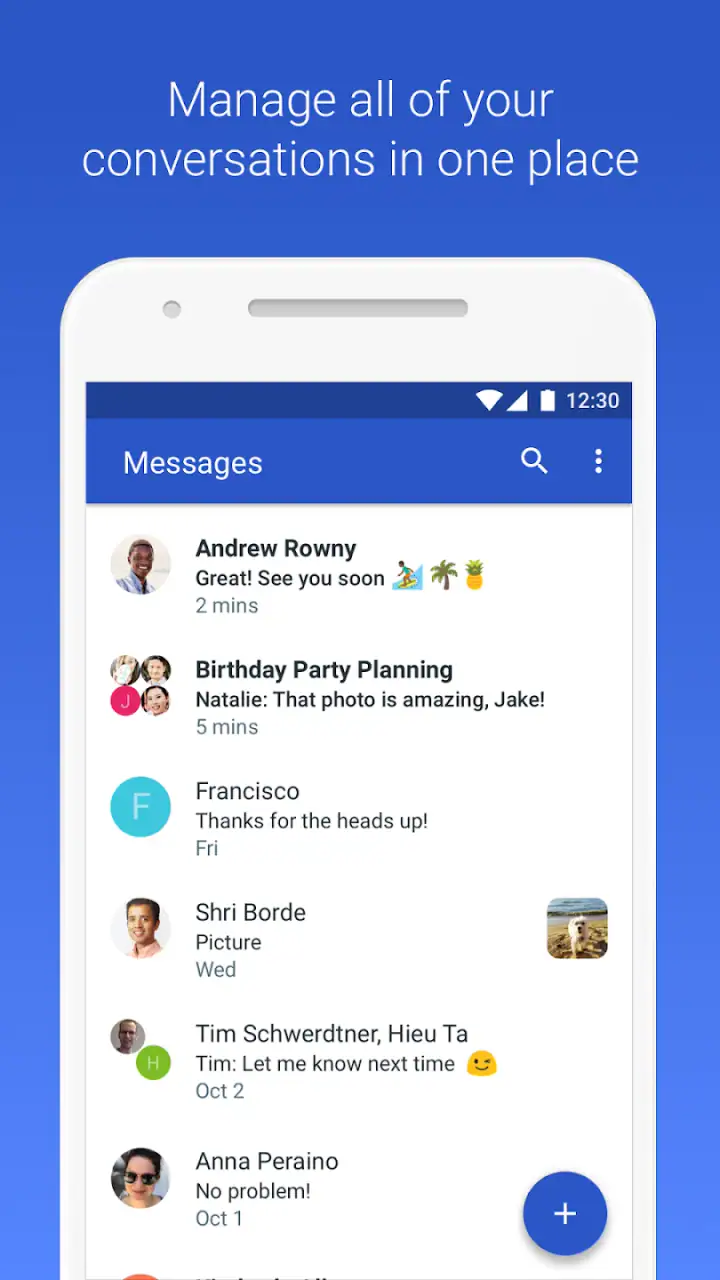
Step two: the phone and carrier negotiate the available service
After the messaging app requests a communication action, the phone and carrier determine which service can actually be used. This is where Carrier Services has its most meaningful role. It enables the latest communication services from mobile carriers, so its contribution depends on the network relationship behind the phone. The app cannot create carrier support where the carrier does not offer it, and it cannot turn an incompatible recipient into a compatible one.
This is the first major trade-off. A system component can be essential to a supported setup while remaining invisible in a setup that uses only basic SMS or a separate internet messenger. I may install it and see no new button, no welcome screen, and no immediate change. That is not necessarily a failure; it may simply mean the rest of the chain is already working, or that my current messaging habits do not use the services it helps enable.
It is also why I would be cautious about judging the app by storage space, interface polish, or how often I open it. Those are useful measures for a normal app, but poor measures for a carrier-facing component. Its success is closer to “the messaging handoff happens without me noticing.” When that happens, the lack of visible activity is actually part of the intended experience.
Step three: the message reaches the supported conversation path
Once the carrier-facing service is available, the messaging app can present the outcome in the conversation. The exact experience still depends on the carrier, device configuration, and the recipient’s side. I should not assume that every contact will receive the same treatment, because communication services are rarely identical across networks and devices. A conversation may use a newer service with one person and fall back to a simpler route with another.
This is where Carrier Services compares differently with familiar alternatives. A platform such as WhatsApp, Signal, or Telegram gives me a complete communication environment: accounts, chats, media handling, and a service that generally works over internet data. Carrier Services does none of that. Its advantage is that it can support carrier-based communication without asking both people to adopt an entirely separate social platform. Its limitation is that it has less control over the experience because the carrier and messaging app remain part of the chain.
For a family member who only uses the phone’s standard texting experience, that distinction can be useful. I may prefer a carrier-supported route because it keeps the conversation in the normal messaging workflow. For a group of friends already using Signal or WhatsApp, Carrier Services offers little reason to replace that app. The better choice depends on whether I value carrier integration or a dedicated cross-platform community.
The handoffs: where responsibility moves between services
The most helpful way to use this app is to follow the handoffs rather than search for a feature list. The messaging app handles the visible conversation. The phone provides the device environment and mobile connection. Carrier Services helps expose the carrier’s newer communication capabilities. The carrier supplies the network-side service. The recipient’s device and network then determine how the message is received.
Each handoff creates a different kind of friction. If the messaging app does not show the expected option, I should first inspect that app’s settings and update status. If mobile data or calls are unreliable, the carrier connection deserves attention. If the behavior changes only with one person, I should avoid blaming the system component immediately. If the issue began after changing phones or SIM cards, a refreshed carrier configuration may be more relevant than reinstalling a separate chat app.
There is also a practical handoff between the user and the operating system. Carrier Services may appear in the installed-app list, yet it is not designed for constant manual interaction. I would avoid repeatedly opening it, clearing information, or disabling it just to see what happens. A system component can look unnecessary precisely because another application depends on it quietly. Manual intervention may remove a communication path without giving me a clear explanation of what changed.
When troubleshooting is necessary, I prefer a reversible sequence. I confirm that the phone has a working mobile connection, restart the messaging app, restart the phone, and check whether the problem affects multiple conversations. I then look for updates to the relevant messaging and system components. Only after those simple checks would I investigate carrier support or consider whether the messaging app itself is the better place to change settings. This workflow is less dramatic than deleting and reinstalling everything, but it preserves useful clues.
A realistic everyday outcome
Imagine I have just moved my number to a new Android phone. I can make calls, but a conversation with a relative no longer behaves as it did on the old device. I send a message from the usual app, and the conversation appears to use a simpler route than expected. Instead of downloading a new messenger immediately, I check the phone’s mobile connection, confirm that the messaging app is current, and leave Carrier Services installed. After the phone and carrier configuration settle, the supported communication path can be available again without changing the contact’s routine.
The important outcome is not a new app icon or a new inbox. It is continuity. My relative still receives the message through the conversation we already use, and I do not need to teach them a new account system. If the carrier does not support the newer service, however, the result may remain ordinary messaging. Carrier Services cannot overcome that boundary, so expectations need to stay realistic.
This workflow is especially useful for people who depend on the default Android messaging experience, use carrier-provided communication features, or regularly change devices and SIMs. It is less useful for someone who communicates almost entirely through internet-based platforms. In that case, the app may be part of the phone’s background setup, but it is not the tool that determines the quality of the conversations they care about.
Where the flow breaks
The biggest weakness is visibility. When everything works, I receive little feedback about what Carrier Services contributed. When something fails, I may see an error in another app and have to infer whether the carrier-facing component is involved. That can make the support path feel scattered, especially for people who expect every installed app to explain its job in plain language.
A second limitation is dependence on outside conditions. The app is not a universal upgrade for messaging. Carrier availability, device compatibility, the messaging app, mobile coverage, and the recipient’s setup all influence the result. Installing it does not guarantee richer communication with every contact. This is a genuine reason to skip active troubleshooting around it if my carrier does not offer the relevant service or if I use a dedicated messenger for nearly all conversations.
A third source of friction is the temptation to compare it with full messaging platforms. That comparison is unfair in one sense, because Carrier Services is not trying to be a chat destination. Still, it matters when choosing a communication setup. A dedicated platform usually gives me clearer account controls, a consistent feature set, and a more obvious support path. Carrier Services gives me tighter integration with carrier communication, but I accept more dependence on network and device conditions.
If messages are failing, I would not begin by repeatedly uninstalling the app. I would first identify the scope of the problem, test another conversation, check mobile connectivity, and inspect the messaging app. If the issue follows a carrier change or a new phone, keeping the component available is sensible while the device completes its setup. If the issue is limited to an internet messenger, Carrier Services is probably not the right place to focus.
Who should keep it and who can ignore it
I see the strongest case for Carrier Services among Android users who rely on carrier-supported messaging and want the default messaging workflow to remain intact. It is also relevant when a phone manufacturer or carrier expects this component to be present for newer communication services. In those situations, its quiet operation is a benefit: I do not need another app competing for attention.
I would not choose it as my main communication app, because it has no independent conversation experience. I would also not recommend it as a substitute for Signal, WhatsApp, Telegram, or another service when the people I contact already live in those ecosystems. Those alternatives are better when I need a consistent internet-based experience across different carriers and devices.
For privacy-conscious users, the practical question is not whether Carrier Services replaces a private messenger—it does not—but whether carrier-based communication fits their expectations. A dedicated messenger may offer a clearer explanation of its communication model and a more consistent experience. Someone who wants that level of control should evaluate the messaging platform they use rather than expecting this system component to provide it.
My conclusion after following the complete path
Carrier Services is easy to misunderstand because its work happens between the visible actions. I start in a messaging app, the phone passes the request toward the carrier, the carrier-supported service determines what is possible, and the conversation returns to the app I already know. The result can be smooth and unremarkable, which is exactly why many people will never think about it until a device change or messaging problem interrupts the flow.
My recommendation is straightforward: if it is already part of an Android phone that uses carrier communication services, I would leave it in place and judge it by whether the messaging workflow remains reliable. I would not install it expecting a new chat interface or a replacement for internet messengers. Its strengths are integration, continuity, and support for the carrier side of newer communication services; its weaknesses are limited visibility and dependence on conditions outside the app.
The best way to think about Carrier Services is as a quiet bridge, not a destination. For the right Android and carrier setup, that bridge can prevent unnecessary changes to the way I text. For users whose conversations already run through dedicated messaging platforms, it may have little noticeable value. Either way, understanding the handoffs helps me troubleshoot sensibly and avoid blaming the wrong part of the communication chain.
As a free Communication app for Everyone, developed by Google LLC, it is broadly accessible and has earned a 4.2 average from a very large Android audience. I would consider those signs of dependable reach rather than a promise of identical behavior on every phone. If my carrier-supported messaging works, the app is doing its job quietly. If I need a complete chat service with a visible identity, richer controls, and a predictable experience across networks, I would choose a dedicated alternative instead.
FAQs for Carrier Services
What is Carrier Services and what does it do?
Carrier Services is an app developed by Google that enables the latest communication services from mobile carriers. It helps improve messaging services on Android devices by supporting features like enhanced messaging and video calling. The app ensures that your device can efficiently utilize the carrier's network capabilities.
Do I need to manually update Carrier Services?
Carrier Services updates are typically managed automatically through the Google Play Store. However, you can manually check for updates by visiting the app's page in the Play Store. Keeping it updated ensures you have access to the latest features and improvements for communication services.
Will Carrier Services affect my device's performance or battery life?
Carrier Services is designed to run efficiently in the background and should not significantly impact your device's performance or battery life. Its primary function is to enhance messaging capabilities, and it operates seamlessly with your phone's existing services.
Can I uninstall or disable Carrier Services?
Carrier Services is a system app, so it cannot be uninstalled from your device. However, you may be able to disable it through your device's settings. Disabling it might affect the functionality of advanced messaging features, so it's generally recommended to keep it enabled.
Is Carrier Services necessary for all Android devices?
While not every Android device requires Carrier Services, it is essential for those using advanced messaging and communication features provided by certain carriers. If your carrier supports these features, having Carrier Services installed ensures your device can fully utilize them.
Pros
- Improves messaging app performance.
- Enhances network connectivity.
- Small app size
- low storage use.
- Updates without user intervention.
- Essential for Google services.
Cons
- Limited direct user interface.
- Requires regular updates.
- May drain battery slightly.
- Not useful on non-Google devices.
- Provides no user-visible features.


